

Class 10 C.Math Lesson 4 Note
#Unit -4 Money Exchange



📘 Class 10 Mathematics – Unit 4: Money Exchange
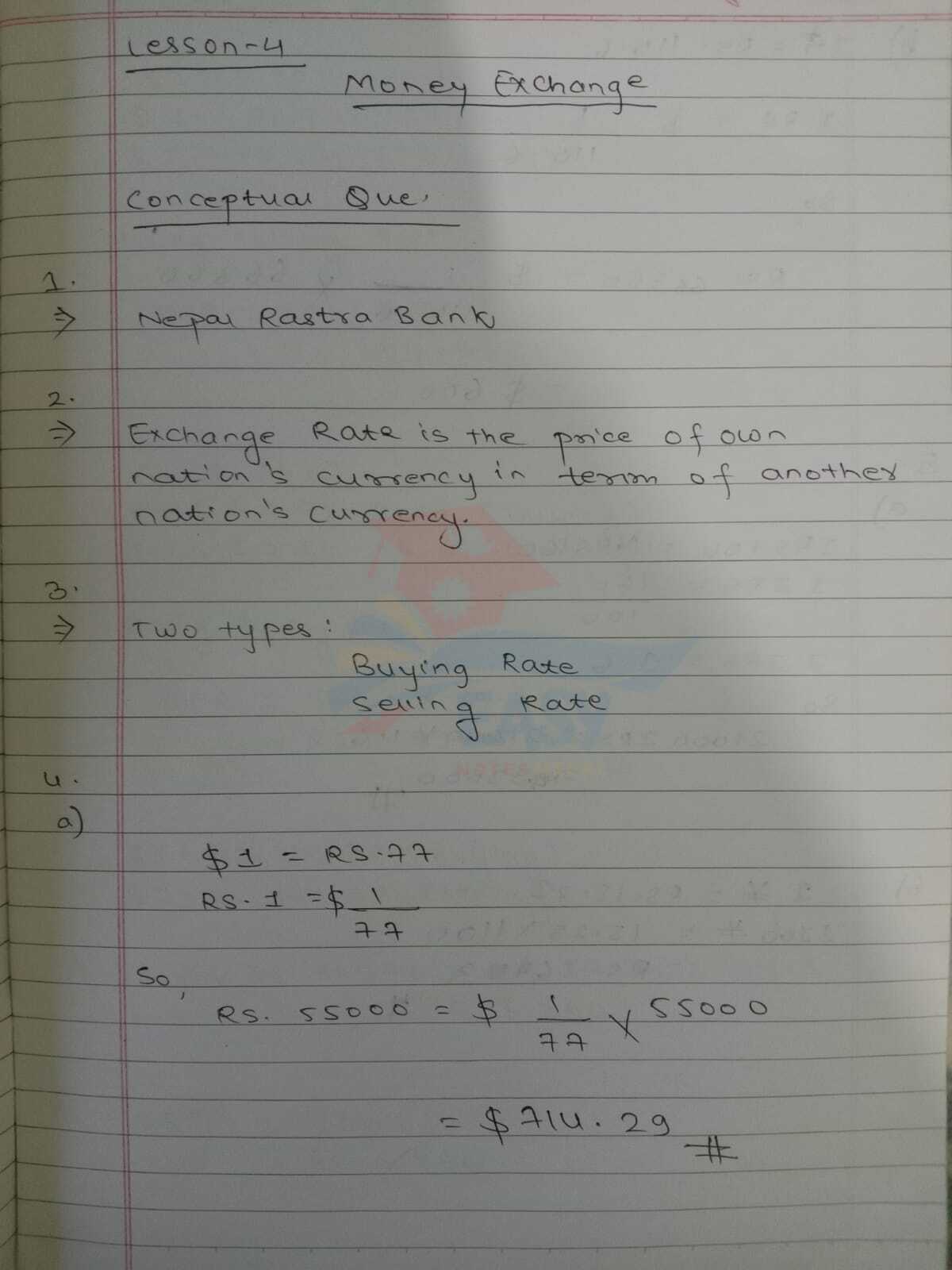
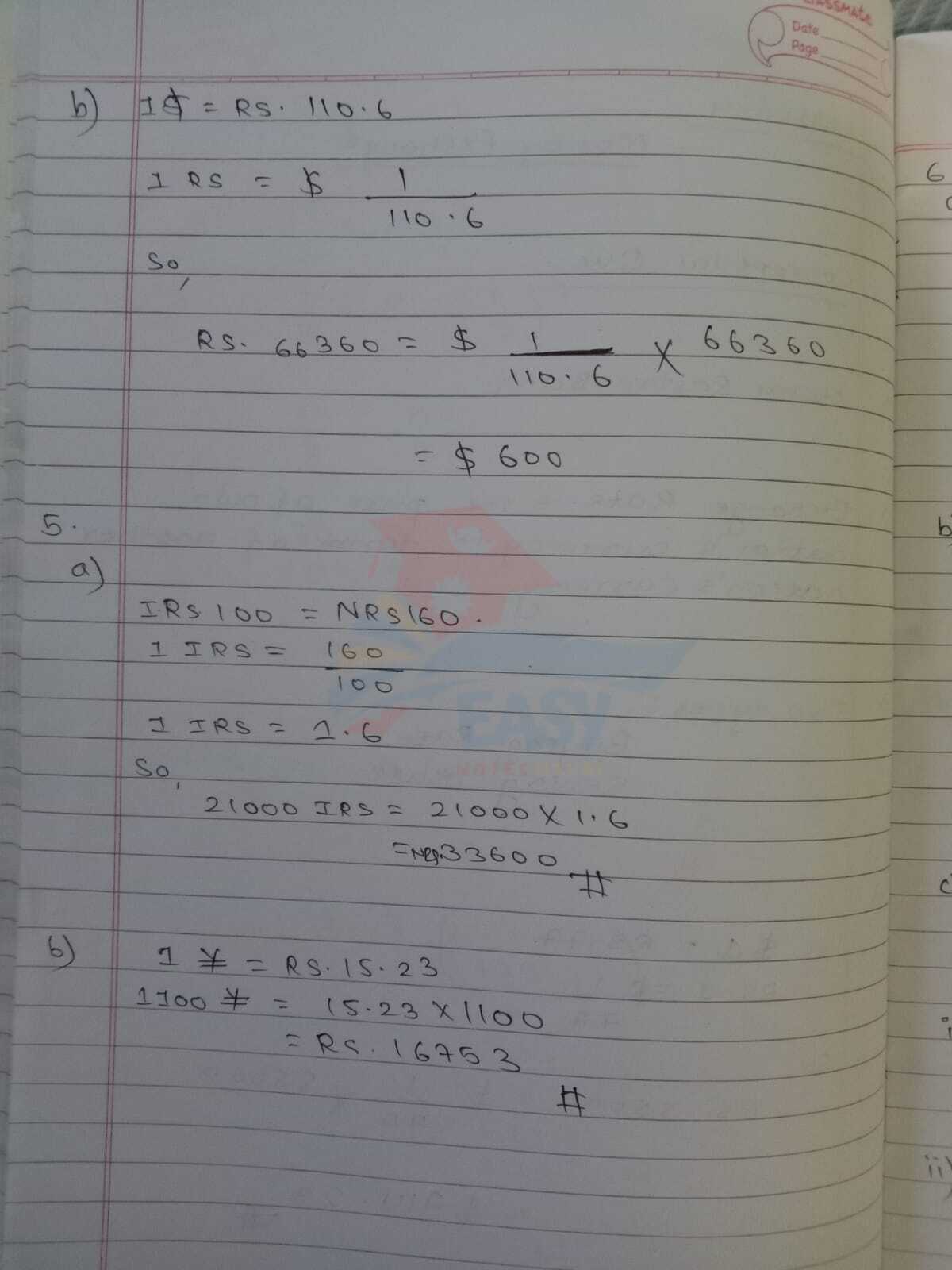
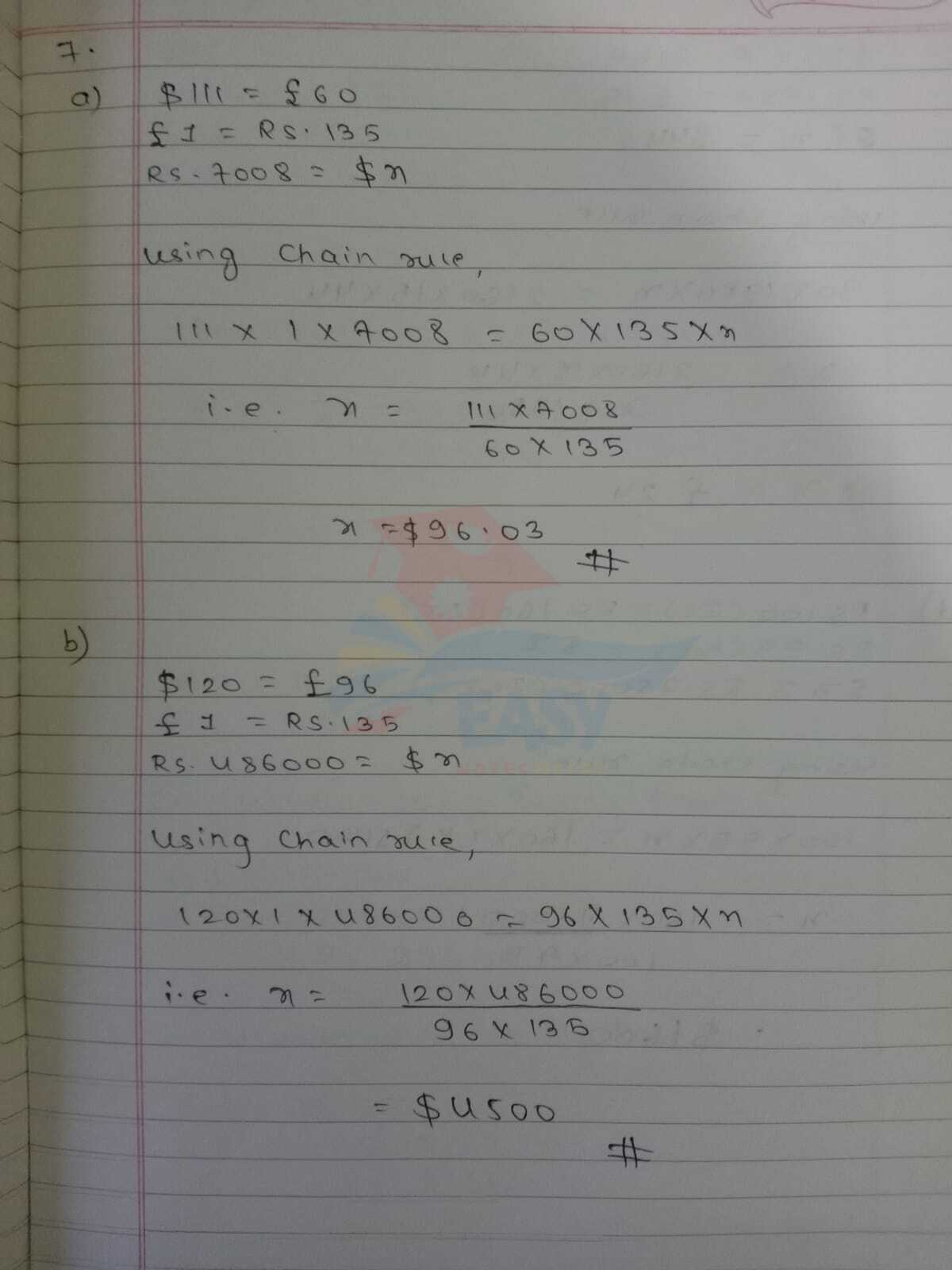
Money Exchange involves converting one currency into another based on a given exchange rate. In Unit 4 of Class 10 Mathematics, students learn how to calculate foreign currency conversion, both from Nepali rupees to foreign currency and vice versa.
This chapter is especially useful for students aiming to work, travel, or study abroad, or those handling remittance and financial transactions.
🧠 Key Concepts Covered
-
Currency Exchange Rate:
The value of one country’s currency in relation to another
(e.g., 1 USD = Rs. 132.5) -
Conversion from Nepali Currency to Foreign Currency:
Foreign Currency=Nepali CurrencyExchange Rate\text{Foreign Currency} = \frac{\text{Nepali Currency}}{\text{Exchange Rate}}
-
Conversion from Foreign Currency to Nepali Currency:
Nepali Currency=Foreign Currency×Exchange Rate\text{Nepali Currency} = \text{Foreign Currency} \times \text{Exchange Rate}
-
Buying Rate vs. Selling Rate:
-
Buying rate: When the bank buys foreign currency
-
Selling rate: When the bank sells foreign currency
-
-
Word Problems:
-
Converting remittance amounts
-
Finding how much money to take for foreign tours
-
Comparing exchange rates from different banks
-
📚 Why This Unit Is Important
This chapter teaches students real-world financial literacy, especially helpful in today’s globalized world. From online shopping to studying abroad, understanding money exchange is a key life skill. It’s also one of the easiest chapters to score full marks with basic arithmetic and formula knowledge.
📥 View the Picture Notes
You have access to full Class 10 Mathematics Unit 4 notes with definitions, formulas, and solved currency conversion examples.
💡 Exam Tip
Always read the question carefully to identify whether you’re using buying or selling rate. Round off your answers neatly as required, and show formula + substitution clearly for full marks.


