

Class 10 Science Lesson 6 Note
#Unit -6 Nature and Environment
1. Choose the correct options for the following questions.
a) Nowadays, sometimes there is low rainfall and sometimes heavy rainfall, which has affected agricultural production. What may be the reason for this?
Answer: ii. Climate change.
b) What is the reason for the increase in the volume of sea level?
Answer: iii. Global warming
c) Which of the following groups is a group of endangered animals?
Answer: i. Swamp deer, Asiatic wild elephant, stripped hyena.
d) In which group of plants does Tulsi belong?
Answer: ii. Medicinal plant.
e) The union of a type of caterpillar with a specific fungi forms Yarsagumba. In this, what is the relation between caterpillars and fungi?
Answer: i. Symbiotic
f) In chickenpox, neem powder paste is applied to the affected parts, and neem leaves are spread on the bed. It helps to heal chickenpox. What property in neem helps to do so?
Answer: iii. Anti-microbial property
g) Which part of Bojo is used for medicinal purposes?
Answer: i. Rhizome
h) Rama has been coughing for a long time. For this, which medicinal plant helps to get relief from cough?
Answer: ii. Boiled tulsi water
i. What is the reason for the natural disaster shown in the given picture?
(Since image is not available here, use this general guide)
Answer: iii. Heavy rainfall
2. Write the differences:
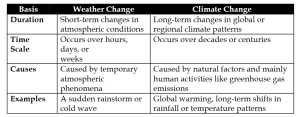
a) Weather Change vs. Climate Change
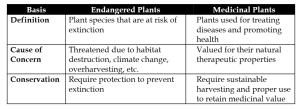
b) Endangered Plants vs. Medicinal Plants
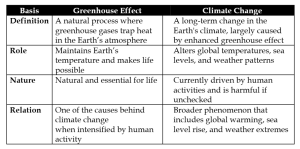
c) Greenhouse Effect vs. Climate Change
3. Give reasons:
a) The main causative factor of non-seasonal rainfall is climate change.
Answer: Climate change leads to the disturbance of traditional weather cycles, causing irregularities in rainfall patterns. Warmer air holds more moisture, which increases the likelihood of sudden, intense rainstorms at unexpected times, resulting in non-seasonal rainfall.
b) Sea level rises due to climate change.
Answer: Climate change causes glaciers and polar ice sheets to melt and adds more water to the oceans. Also, the warming of seawater leads to thermal expansion. These two factors together contribute to the rise in sea levels globally.
c) Climate change also causes the extinction of animals.
Answer: Rising temperatures, shifting habitats, and disrupted food chains caused by climate change make survival difficult for many species. Some animals cannot adapt quickly to these changes, leading to population decline and eventual extinction.
d) Endangered animals can be protected by conserving their natural habitat.
Answer: Habitat conservation ensures that animals have access to the essential resources they need for survival, such as food, water, and shelter. Protecting natural ecosystems reduces human interference and promotes biodiversity conservation.
e) The use of medicinal plants is beneficial for human health.
Answer: Medicinal plants contain natural bioactive compounds with healing properties. They are used to treat a wide variety of diseases, support the immune system, and improve general well-being. They often have fewer side effects compared to synthetic drugs.
f. Tulsi is called a life-giving plant.
Answer: Tulsi is referred to as a life-giving plant due to its extensive medicinal properties. It boosts immunity, reduces stress, and acts as an adaptogen. It is used in treating respiratory disorders, infections, and inflammation, making it vital for natural health care.
g) Neem is a multipurpose medicinal plant.
Answer: Neem has a wide range of medicinal and agricultural uses. Its leaves, bark, and seeds contain compounds with antifungal, antibacterial, and anti-inflammatory properties. It is also used in making herbal cosmetics, pesticides, and skincare products.
h) Yarsagumba is used as an energy-booster herbal medicine.
Answer: Yarsagumba is highly prized in traditional medicine for its ability to enhance energy, stamina, and libido. It is considered a natural tonic that improves physical endurance, supports respiratory health, and combats fatigue.
4. Answer the following questions:
a) What is climate change?
Answer: Climate change is a long-term shift in global or regional climate patterns, especially an increase in global average temperatures. It is driven primarily by human activities such as burning fossil fuels, deforestation, and industrialization, which release greenhouse gases like carbon dioxide and methane into the atmosphere, enhancing the greenhouse effect.
b) Write the main reasons for climate change.
Answer:
- Burning of fossil fuels: Releases large amounts of CO₂ and other greenhouse gases.
- Deforestation: Reduces the number of trees that absorb carbon dioxide.
- Industrial emissions: Factories and chemical plants emit greenhouse gases.
- Agricultural activities: Livestock farming and rice cultivation emit methane and nitrous oxide.
- Urbanization and land use change: Contributes to local and global climate disruption.
c) Describe the effects of climate change.
Answer:
- Global warming: Increase in Earth’s average temperature.
- Melting ice and sea-level rise: Leading to coastal erosion and displacement of communities.
- Extreme weather events: More frequent and intense storms, floods, and droughts.
- Loss of biodiversity: Many species may go extinct due to changing habitats.
- Impact on agriculture: Changes in rainfall and temperature affect crop yield and food security.
d) What types of animals are called rare animals?
Answer: Rare animals are species with small populations or limited geographic ranges. They are often threatened by extinction due to factors like habitat destruction, poaching, pollution, and climate change. Their rarity makes them vulnerable and in need of protection.
e) What measures can be adopted to protect rare animals?
Answer:
- Protect natural habitats through legal frameworks and reserves.
- Enforce anti-poaching laws and regulate wildlife trade.
- Promote awareness and education about endangered species.
- Support breeding programs and reintroduction to wild habitats.
- Encourage international cooperation in wildlife conservation efforts.
f) What role can you play to protect plants endangered due to climate change?
Answer:
- Participate in local tree-planting and conservation programs.
- Avoid activities that harm forests and natural habitats.
- Educate others on the importance of plant biodiversity.
- Support policies and organizations that protect endangered plants.
- Promote organic farming and sustainable land use to minimize environmental impact.
g) Why is it important to train local people on processing and using medicinal herbs?
Answer:
Training local communities in the identification, harvesting, and processing of medicinal herbs ensures sustainable use and economic empowerment. It preserves traditional knowledge, improves product quality, promotes herbal healthcare, and creates livelihood opportunities through local entrepreneurship.
h) How can protecting and increasing the production of Yarsagumba improve Nepal’s economy?
Answer:
Yarsagumba is highly valued internationally for its medicinal properties, commanding high market prices. Protecting its natural habitat and cultivating it sustainably can:
- Generate significant income for local collectors.
- Create jobs in harvesting, processing, and marketing.
- Promote eco-tourism and research-based travel.
- Enhance exports and national revenue.
- Support rural economic development in high-altitude regions.
i) Study the concept map and complete it.
Answer:
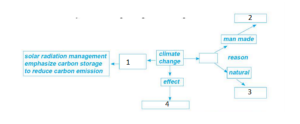
- 1= Preventive measures
- 2= Release of greenhouse gases, industrialization , fossil fuel , deforestation
- 3= Decomposition of organic matter, solar activities , volcano , reflection and absorption of sunlight
- 4= Rise of sea level , loss of biodiversity , decrease in agricultural production , irregular rainfall , frequent disasters
j) Analyze the differences between part A and part B by observing the given picture.
Answer:
|
Part A |
Part B |
|
|
Depicts a healthy environment with greenery, clean air, and sustainability. |
Shows environmental degradation—pollution, global warming, and dryness. |
|
|
Represents a balanced ecosystem and climate stability. |
Represents climate change, destruction, and global warming. |
|
|
Symbolizes natural harmony. |
Symbolizes human-caused damage to nature. |
k) Look at the picture thoroughly and explain its role in climate change.
Answer:
The picture shows a person walking through a large pile of burning or rotting waste, releasing smoke and harmful gases. This kind of open waste burning and unmanaged dumping contributes significantly to climate change. It emits greenhouse gases like carbon dioxide and methane into the atmosphere, increases air pollution, and contributes to global warming. Additionally, improper waste management releases toxic substances, harms biodiversity, and degrades soil and water, further disrupting the environment.
l) The one-horned rhinoceros is on the verge of extinction. What can be done to protect it? Write in brief.
Answer:
To protect the one-horned rhinoceros, the following actions should be taken:
- Strict anti-poaching laws and enforcement to prevent illegal hunting.
- Conservation of its natural habitat by protecting grasslands and wetlands.
- Establishing protected areas like national parks and wildlife reserves.
- Awareness programs to educate people about the importance of rhino conservation.
- Community participation in protecting wildlife and promoting eco-tourism for sustainable support.
m) Identify the main reason for dependence on others for medicinal herbs and suggest what can be done to maximize their local use.
Answer:
Main Reason:
Despite the availability of medicinal herbs in our locality, people often lack proper knowledge about their identification, processing, and use. This leads to dependence on external sources or modern medicine for common ailments.
What Can Be Done:
- Conduct training and awareness programs to educate locals about the proper use of medicinal herbs.
- Promote home gardens and herbal farming for growing commonly used medicinal plants like Tulsi, Neem, and Aloe Vera.
- Support local healers and traditional knowledge systems to document and share herbal uses.
- Establish community herbal centers where people can access processed herbs and learn about natural remedies.
- Government and NGO involvement in promoting sustainable harvesting and conservation of medicinal plants.


